10 Steps to Achieve Success and Happiness
It is never too late to be who you might have been. George Elliot
We can often fall into despair at times in our life. Achievements are not made. You feel like others are passing you by. The good news is that if you are still here with breath in your body, it is not too late to change course. Start by writing down what you want out of life in a journal or on your computer. If you prefer, make a vision board using magazines or images from the internet. For the purposes of this exercise, let go of any thoughts of obstacles that could arise and just allow your imagination to run.
The life you design starts with habits you need to develop.
As you go through your day, identify existing habits and life practices that keep you from your vision of a better life. Be honest with yourself and contemplate the value or joy they bring. Maybe you only need to make a small adjustment. You may uncover a habit you need to steer 180 degrees in the other direction. For example, do you make a habit of casual and frequent purchases instead of saving money? Is your house cluttered with items you don’t really use? Do you flop in front of the TV after eating instead of going for a walk or getting items done around the house? Take a week or two and take stock of these habits. We will use them in the following steps.
If you do what you always did, you will get what you always got.
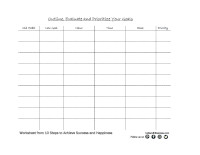
Get to work on your mindset. To make the changes you desire in life, you cannot stay on the proverbial hamster wheel. You have to be willing to make a change. You cannot expect to lose 20 lbs if you keep a habit of eating a danish with your coffee every morning. You will not be able to buy a house if your monthly budget cannot sustain eating from a restaurants every other day. Change is not comfortable but it is possible. You have to be a willing agent in your own success. Organize a list of goals or new habits on the left side of a piece of paper and then draw two vertical lines down the right side of the page giving you three columns of open space. Use the far right column to list the risks and repercussions of not meeting those goals.
You can also download a free template by clicking here or use the link at the bottom of this page.
If you want to fly, give up everything that weighs you down.
Now that you have taken a week or two to observe your habits and patterns, it is time to decide which ones need to change. We often uncover a life full of multiple small routines that have become obligatory and have long lost their meaning. Have you found that 1 hour of your day is spent on the phone or at the office in idle gossip? What if you found a polite way to just abstain from that activity and used the time instead doing some physical activity or finding a fun money saving game? Maybe you want to get back to a creative activity. When you discard habits that don’t have any real value or joy, you will quickly discover how much time you have in one day. Go back to your list of new habits and goals. In that first column, write out a few notes on the personal value it would bring to your life.
If you change the way you look at things, the things you look at change. Wayne Dyer
This practice can be swapped in sequence with number 4 above. They are interchangeable but separate concepts. Perception is our reality. For example, a couples counselor will often abstain from negating or upholding either side of a dispute because in reality both people are recalling their truth as they lived it. On a lighter note, a common exercise in a drawing class is to draw an object not by observing the object but rather observing the negative space that surrounds it. The students draw the space surrounding the object and not the object itself. In this step, review your list of goals and observe them from the outside. Would success for you bring success or wellness to others? Would it change the shape of the world that surrounds you? If so, make note of that in the value column.
You can do anything, but not everything.
In the next step, we want to identify any time constraints or urgency. We also want to figure out if there are any dependencies between your goals. Is one of them dependent on a particular season of the year? Do you want to take up gardening but it is November? Is there a sequence you need to consider? For example, do you want to buy a home but first you need to cut down on spending for a year in order to invest? Maybe one goal is slightly more important to you than the other like spending more time with your family versus a desire to get back to creative writing. Make these notes in the the second column. The time column. We need to acknowledge that although we can achieve anything, we cannot achieve everything all at once. This will help you start to organize your thoughts and prioritize the most important goals and habits you want to achieve.
A wish changes nothing. A decision changes everything.
At this stage of the process you opened up your life to more valuable habits and started to discard unhealthy ones. You added three additional factors to your list of goals: value, time, and risk. So, now we have to start making decisions and get the list into a ranked order. It is ok for a list of goals to be infinite. It is good to be ambitious but we set ourselves up for failure if we try to complete everything all at once. You want to prioritize. Look over your list and see if one of them has the highest value, most urgency, and most risk if you do not achieve it. Mark that with #1. No goal can share the same ranking (i.e. you cannot have two #1 goals). If you find you are struggling, then just pick 2 for comparison. It will be evident which one is more important than the other. Mark them 1 and 2 then move onto goal 3. Where does it land? Above the current #1, between #1 and #2? Continue this process until everything is ranked.
Wishing is easy but it takes action to make your dreams come true.
When you rank and prioritize the changes you want to see in your life, you will make the most of your finite time and energy. Making an action plan can be overwhelming when we try to take on too many changes but now you have your #1 goal/new habit and it is time to dive deep into the details. Outline an action plan by identifying smaller achievable goals. Do you need to reduce stress? Start with some research online or at the bookstore. Read a few articles. If possible, work through the entire action plan and complete your first goal before you take on the second. If your first goal will take significant time to complete, stay the course. However after a few weeks or months, go ahead and start to outline an action plan for your second goal.
“I can’t” is a coward, “I’ll try” is a soldier, “I will” is a king.
Success is a daily practice. Remember that your mindset is important if you want to achieve success. If you waiver on commitment, it will be impossible to effect the changes you want to see in your life.
The giant oak is an acorn that held its ground.
At some point long this journey, you will experience a lack of support from someone in your family or a friend. Perseverance will see you through. Use all of the notes you made in earlier steps in this exercise to remind yourself why these new habits and goals are so important. If it is important to you, stay the course and show them you are able to succeed. And always remember the giant oak tree in the forest sprouted many years ago from a humble seed.

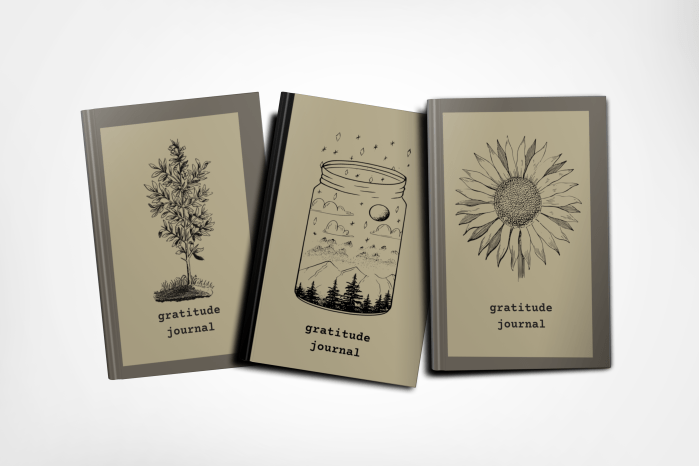
Keeping a journal and developing a practice in gratitude help many to achieve happiness and success. Take a moment to Check out our journals here on Holland Hills Press.com
Find insight and inspiration through some of our other POSTS and free downloads:
- A Grateful Mind is a Peaceful Mind: 5 Life Lessons You Can Use to Reduce Stress
- Success is a Daily Practice: 10 Steps to Achieve Success and Happiness
- Achieve Personal Growth Through a Gratitude Journal
- 5 Quotes That Will Inspire Personal Growth
- 5 Quotes That Inspire Worthwhile Goals
- Time is a Precious Gift
FOLLOW US ON


Subscribe to receive alerts on new posts

 Holland Hills Press