Our team came together in a fun challenge to figure out all the ways we consume inspirational quotes to ultimately figure out why we are compelled to frame them for our offices, hang on to little slips paper from fortune cookies, or pin them to our vision boards to name a few. When we designed our gratitude journals, we wanted to print at least one quote for every week of the year. Why during development after assembling many long lists of quotes did we cut one but keep another? What drew us to the 51 quotes we kept?
We decided to share the thoughts from our discussions in this week’s post. It even inspired our next series of journals that are scheduled to hit the shelves in late April. As a thank you to all of our followers, we added a companion PDF to this post. As we near the launch of the new journal, we will share more information.
Why we Like Love inspirational Quotes?
We seek inspiration because our lives often feel chaotic. A well-placed quote gives us pause. It clarifies an idea with brevity and grace. They affirm our feelings and beliefs. They trigger actions that improve our lives. They make us look at the world differently.
What is the genesis of an inspirational quote?
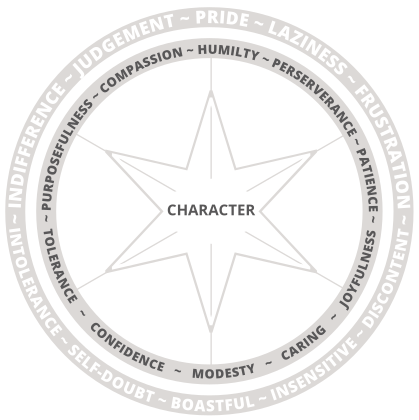
Contemplation of life experience and the human condition. We observe both the good and bad consequences of our actions. We recognize the presence or absence of fundamental virtues. We value a strong character which resides at the intersection of complementary virtues. And, we aspire to have a virtuous character in order to transcend our flaws.
A Companion Guide for our Gratitude Journals
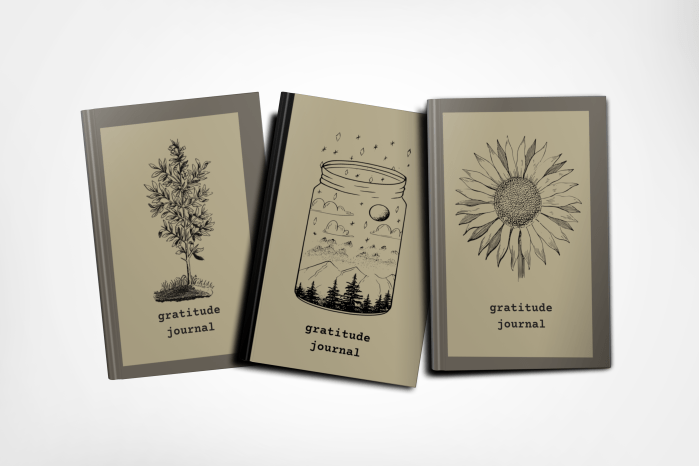
There are 51 quotes in our gratitude journals for every week of the year and a set of open text pages for the 52nd week. As you work through each week, contemplate the virtues you think inspired the quote printed on the page.
As an example, we highlighted the virtues we think inspired this quote. You may find you would select more.
Are these virtues you aspire to have? If so, write why on the pages of the journal. You can also write about the negative traits these virtues allow you to transcend. For example:
Grief, Judgement, Lack of Concern, Self-Centeredness
Spend a set amount of time each day in gratitude
Use the journal to write a few words of gratitude for life lessons or remark on your personal growth.
Find insight and inspiration through some of our other POSTS and free downloads:
A Grateful Mind is a Peaceful Mind: 5 Life Lessons You Can Use to Reduce Stress
Success is a Daily Practice: 10 Steps to Achieve Success and Happiness
Achieve Personal Growth Through a Gratitude Journal
Our social team noticed this quote was one of our most pinned and re-shared posts on all platforms. We took some time to reflect on why this might be. Robert made a note that after a call or meeting, he always thanked people for their time. Many team members said they do the same thing. Perhaps it is our life experiences that teach us why time as a gift. When we ask for and receive an hour from someone’s day, we are compelled to acknowledge that sacrifice because it is one less hour they had to tend to priorities in their life.
Time is a gift
Everyone at one point or another wishes they had more hours in the day. One practical reason is because it is limited. We will be constrained to 24 hours until we are gone from this life. We thank people for giving us their time. We find ourselves losing patience with someone who is taking up too much of our time. Our children at their purist thoughts say they don’t want more toys, they want more time with their parents…play time, reading time, any time. When someone we love dies, we feel regret not spending enough time with them learning about their lives and life lessons. We feel robbed of time.
Time is precious
Maybe what makes that last line so poignant is that time is not a thing you can hold on to, make more of, or stash away in a safe. Time is precious because all the other things you can compare it to can be held, produced and stored away for later. A common definition for precious is – “An object, substance, or resource of great value; not to be wasted or treated carelessly.” If you read this list of quotes and idioms, it is likely you have heard most if not all of them:
Time heals all wounds
Time is what we want most but what we use worst.
An inch of time is an inch of gold but you can’t buy that inch of time with an inch of gold.
Time moves slowly, but passes quickly.
Living on borrowed time
Yesterday’s the past, tomorrow’s the future, but today is a gift. That’s why it’s called the present.
Comedy = tragedy + time
All in good time
Wasting time is robbing oneself.
Time is tied to the human condition
We measure our lives by milestones of key events we share like birthdays, graduations, weddings, winning awards, our first kiss, or our first job. When we have a productive day, we relish in crossing items off a To Do list because we spent time well. We contributed to a goal. When we squander time by procrastinating we have anxiety. When we live up to our responsibilities, the anxiety subsides. Time spent listening those we love and admire make us better people. A somewhat recent and trending term is ‘self-care’. This is simply time we intentionally set aside to take care of ourselves. Those who belong to a religion are called to give time to God through worship and to others through charity. Time is an offering, a precious offering.
Thank you for taking time out of your day to read this post and check out our site.
Our team continues to find a lot of value dedicating time each week writing in a gratitude journal. Recently we completed Week 3. Even in this short amount of time, it is amazing how it quiets the mind and sets a calm tone for the hours that follow. The inspirational quotes make one reflect on positive virtues we all aspire to and the act of writing out gratitude for the events of our lives make one appreciate them even more. If you want to give it a try, download this free sample page and print as many copies as you like. Share the link with a friend. You may be amazed how quickly it can change your life.
We are not bestowed the qualities we desire. We are merely given opportunities to embody them
If you wish you were patient, courageous, maybe a leader, pay attention when opportunities present themselves to temper those qualities. If you fear failure, don’t. Know that your God placed these abilities deep within you and will be with you always on your path to success.
A vision of your best self and best life is there waiting to be uncovered
An artist will visualize a sculpture inside a piece of rock. Their job is to cut away the pieces that are not part of their final vision. If you struggle with the pain of past friends and loves or lost jobs, view them as the pieces of your life that had to fall away in order to uncover your best life.
I dream of painting and then I paint my dream.–Vincent Van Gogh
Great artists spend a significant amount of time in stillness visualizing what they want to create. Great athletes spend a significant amount of time in stillness visualizing victory over their opponents. Goals worth achieving take time and process so that it sinks into your soul and comes out of your pores. Allow yourself the gift of all consuming imagination and limitless possibility.
Give yourself permission to follow your instincts.
Whether you wrote in a journal everyday or just on occasion, make a habit of going back to older journal postings to read any observations you made on past decisions. Hindsight is 20/20. Did your instincts lead you down the right path? If so, this is a great way to hone your instincts and to teach yourself to trust in them.
The best and most beautiful things in the world cannot be seen or even touched. They must be felt with the heart. –Hellen Keller
Gratitude for the small things that come to us in life is easy to identify (a gift from a friend, a roof over our head). Gratitude for bigger picture items especially those that don’t seem like a blessing are never easy (the loss of a loved one).
Remember there is beauty in all events of life and we will find it if we are open to it. (A loved one who suffered a great deal of pain in their last days but is now free of suffering and reunited with her father who passed away when she was an infant)
At the bottom of this post, you have access to a free download. Print out as many copies as you need. You can also upload it to your computer, tablet or Amazon Scribe if you prefer to journal electronically. Write once a day, several times a day, or once a week. Find what works for you. Consistently writing out a list of gratitude will show you just how much you have to be grateful for.
How to use the Writing Prompts
We have two types of journals on Holland Hills Press, the extended and abridged series. Both of them include the same writing prompts. When or if you use them is a personal preference. They are repetitive on purpose because they are simple and open ended statements that are easy to adapt day to day. Other people prefer a blank page for complete freedom and creativity. A lot of people use both and find the writing prompts are a good warm up to deeper self-refection.
This week I am grateful for…
We always put this prompt first as a warm up because it is short and simple. The What can be a bullet list of items/events. If you prefer, write it as a series (i.e., item 1, item 2, item 3, etc). The goal is to get the pen moving.
Here is what made this week great…
You can cover additional items here or dive deeper into an item from the previous section. Even though the word ‘what’ is in the statement, think of this section as the Why or Who. Did someone do something nice for you? Did you make progress on a new goal?
Some amazing things that happened this week…
Was there an event that stood out from the others this week? Did it fill you with complete joy? A gratitude journal provides a fairly quick return on investment. When we simply take the time to acknowledge why we are grateful, the more grateful we become.
What I can do to make next week even better…
If you are new to this practice, you will find an observed life helps you achieve great success. You will identify ways to build on new productive habits. You can also use this personal feedback loop as support when you experience a setback. Use next week to try again or try something different.
If you want to lift yourself up, lift up someone else.
-Booker T Washington
This lesson should live within you always during stages of success and failure. If you achieve any level of success be sure to pay it forward help someone realize one of their goals. If you feel stuck by failure or depression, the quickest path to feeling better is to do something kind for someone in greater need.
Everything is going to be ok in the end. If it is not ok, it is not the end.
Life can seem long. Periods of great stress can weigh us down. If you are someone who truly believes everything works out for the right reason, you will be able to weather this storm. If you struggle with faith in this belief, take time to reflect back on a past experience that brought great stress and sadness. With enough time and distance, were you able to gain any perspective or knowledge from that time in your life? Write down any helpful insights from then that could help you see through this new challenge.
When you wake up and are in a bad mood, choose to be kind.
Regardless of religious and spiritual beliefs, most people agree that you get out of life what you put into it. When we are stressed, our patience is short. At our weakest moments, we dump our bad energy on to others. Find a healthy way to communicate the things that are bringing you stress. Everyone has an innate desire to help someone who expresses need.
When you don’t know where to start, simply take that first step to anywhere it leads.
It is easy to get overwhelmed. If the day ahead seems overwhelming and progress seems impossible, just pick one thing that is manageable and doable today. On the darkest days, the greatest challenge you face may simply be to get out of bed. That is ok. Do that one thing and do not accept defeat. You could even try productive procrastination where you complete some task that is not the most important but nonetheless needs to get done. It may be small but it is a start. It may just be the small spark you needed to ignites your greater momentum.
If you are patient in one moment of anger, you will escape 100 days of sorrow.
We are the reason for yet answer to most of our problems.
Typically anger is a symptom of deep rooted issues. Maybe we are angry with someone who constantly disappoints us. Maybe we are angry with financial circumstances that are out of our control. We will never have the power to control all events that happen to us, but we always have the power to control how we react. Use these moments as an opportunity to exercise patience and kindness and escape the trap of self-inflicted misery anger perpetuates.
Research has associated great happiness to people who spend a set amount of time each day in gratitude. Beginners may feel overwhelmed at first but even short 5 minute self-reflections can transform your life. Consistently writing out a list of gratitude will show you how much you have to be grateful for.
It is never too late to be who you might have been.George Elliot
We can often fall into despair at times in our life. Achievements are not made. You feel like others are passing you by. The good news is that if you are still here with breath in your body, it is not too late to change course. Start by writing down what you want out of life in a journal or on your computer. If you prefer, make a vision board using magazines or images from the internet. For the purposes of this exercise, let go of any thoughts of obstacles that could arise and just allow your imagination to run.
The life you design starts with habits you need to develop.
As you go through your day, identify existing habits and life practices that keep you from your vision of a better life. Be honest with yourself and contemplate the value or joy they bring. Maybe you only need to make a small adjustment. You may uncover a habit you need to steer 180 degrees in the other direction. For example, do you make a habit of casual and frequent purchases instead of saving money? Is your house cluttered with items you don’t really use? Do you flop in front of the TV after eating instead of going for a walk or getting items done around the house? Take a week or two and take stock of these habits. We will use them in the following steps.
If you do what you always did, you will get what you always got.
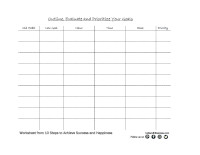
Get to work on your mindset. To make the changes you desire in life, you cannot stay on the proverbial hamster wheel. You have to be willing to make a change. You cannot expect to lose 20 lbs if you keep a habit of eating a danish with your coffee every morning. You will not be able to buy a house if your monthly budget cannot sustain eating from a restaurants every other day. Change is not comfortable but it is possible. You have to be a willing agent in your own success. Organize a list of goals or new habits on the left side of a piece of paper and then draw two vertical lines down the right side of the page giving you three columns of open space. Use the far right column to list the risks and repercussions of not meeting those goals.
If you want to fly, give up everything that weighs you down.
Now that you have taken a week or two to observe your habits and patterns, it is time to decide which ones need to change. We often uncover a life full of multiple small routines that have become obligatory and have long lost their meaning. Have you found that 1 hour of your day is spent on the phone or at the office in idle gossip? What if you found a polite way to just abstain from that activity and used the time instead doing some physical activity or finding a fun money saving game? Maybe you want to get back to a creative activity. When you discard habits that don’t have any real value or joy, you will quickly discover how much time you have in one day. Go back to your list of new habits and goals. In that first column, write out a few notes on the personal value it would bring to your life.
If you change the way you look at things, the things you look at change.Wayne Dyer
This practice can be swapped in sequence with number 4 above. They are interchangeable but separate concepts. Perception is our reality. For example, a couples counselor will often abstain from negating or upholding either side of a dispute because in reality both people are recalling their truth as they lived it. On a lighter note, a common exercise in a drawing class is to draw an object not by observing the object but rather observing the negative space that surrounds it. The students draw the space surrounding the object and not the object itself. In this step, review your list of goals and observe them from the outside. Would success for you bring success or wellness to others? Would it change the shape of the world that surrounds you? If so, make note of that in the value column.
You can do anything, but not everything.
In the next step, we want to identify any time constraints or urgency. We also want to figure out if there are any dependencies between your goals. Is one of them dependent on a particular season of the year? Do you want to take up gardening but it is November? Is there a sequence you need to consider? For example, do you want to buy a home but first you need to cut down on spending for a year in order to invest? Maybe one goal is slightly more important to you than the other like spending more time with your family versus a desire to get back to creative writing. Make these notes in the the second column. The time column. We need to acknowledge that although we can achieve anything, we cannot achieve everything all at once. This will help you start to organize your thoughts and prioritize the most important goals and habits you want to achieve.
A wish changes nothing. A decision changes everything.
At this stage of the process you opened up your life to more valuable habits and started to discard unhealthy ones. You added three additional factors to your list of goals: value, time, and risk. So, now we have to start making decisions and get the list into a ranked order. It is ok for a list of goals to be infinite. It is good to be ambitious but we set ourselves up for failure if we try to complete everything all at once. You want to prioritize. Look over your list and see if one of them has the highest value, most urgency, and most risk if you do not achieve it. Mark that with #1. No goal can share the same ranking (i.e. you cannot have two #1 goals). If you find you are struggling, then just pick 2 for comparison. It will be evident which one is more important than the other. Mark them 1 and 2 then move onto goal 3. Where does it land? Above the current #1, between #1 and #2? Continue this process until everything is ranked.
Wishing is easy but it takes action to make your dreams come true.
When you rank and prioritize the changes you want to see in your life, you will make the most of your finite time and energy. Making an action plan can be overwhelming when we try to take on too many changes but now you have your #1 goal/new habit and it is time to dive deep into the details. Outline an action plan by identifying smaller achievable goals. Do you need to reduce stress? Start with some research online or at the bookstore. Read a few articles. If possible, work through the entire action plan and complete your first goal before you take on the second. If your first goal will take significant time to complete, stay the course. However after a few weeks or months, go ahead and start to outline an action plan for your second goal.
“I can’t” is a coward, “I’ll try” is a soldier, “I will” is a king.
Success is a daily practice. Remember that your mindset is important if you want to achieve success. If you waiver on commitment, it will be impossible to effect the changes you want to see in your life.
The giant oak is an acorn that held its ground.
At some point long this journey, you will experience a lack of support from someone in your family or a friend. Perseverance will see you through. Use all of the notes you made in earlier steps in this exercise to remind yourself why these new habits and goals are so important. If it is important to you, stay the course and show them you are able to succeed. And always remember the giant oak tree in the forest sprouted many years ago from a humble seed.























 Holland Hills Press